
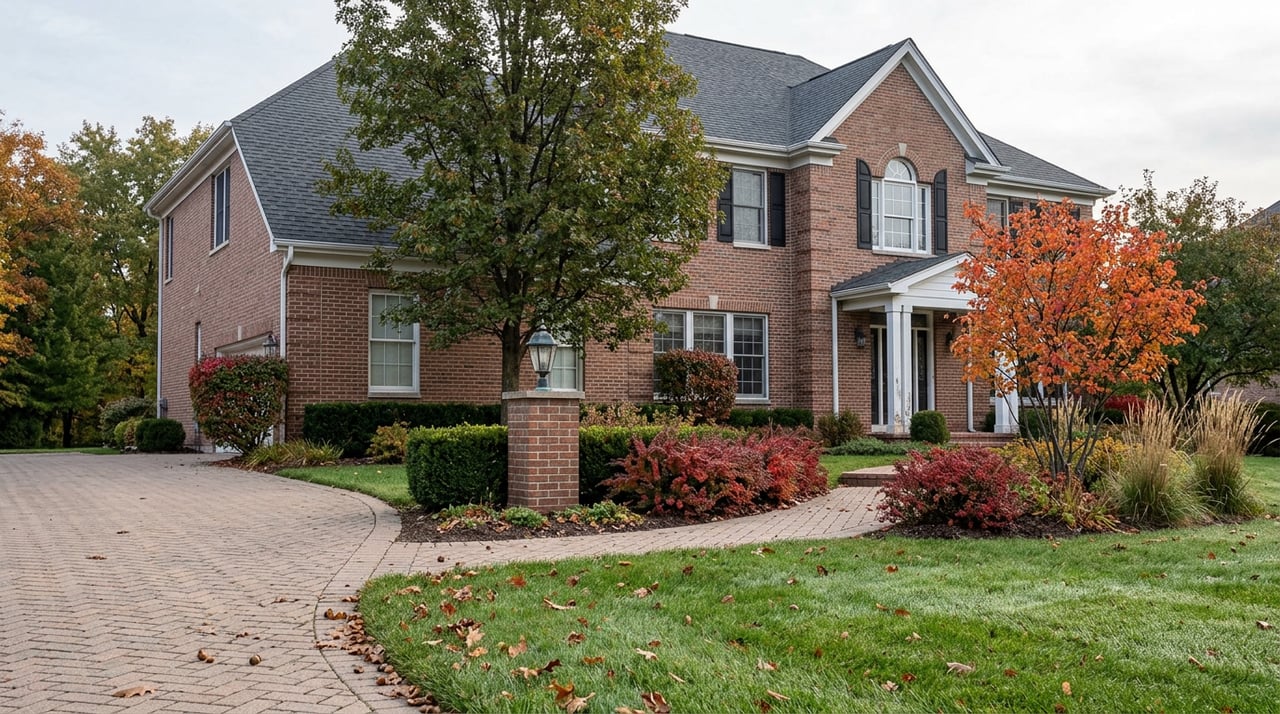
Ask most people what defines River Creek and they'll say the golf course. It's the first thing you see driving in past the gate, and it's the reason the community exists in its current form at all. But the course sits inside 600 acres, and roughly half of that acreage was set aside as undeveloped, community-owned open land when the neighborhood was built. Most of what makes River Creek worth walking around isn't on the scorecard. It's on the trail that leads to Confluence Park, and most residents who've lived here for years have never followed it all the way to the end.
That's not a knock on anyone's routine. It's just a gap between what the community actually contains and what gets used on a typical week.
The mile marker most residents never reach
River Creek has more than seven miles of hiker and biker trails connecting the neighborhood's streets to Confluence Park, the point where Goose Creek meets the Potomac River. Walk the full stretch and you pass a string of smaller "tuck-in" parks, river vistas, and enough tree cover that the golf course disappears behind you within a few minutes.
At the end of the trail, next to the floating dock where residents launch kayaks and canoes, there's a historical marker most people walk past without reading closely. It was designed by historian Craig Swain and commemorates a specific three-day stretch in the summer of 1863, when roughly 90,000 Union soldiers crossed the Potomac at this stretch of river on their way to Gettysburg. The marker wasn't unveiled on some arbitrary anniversary date picked for convenience. It went up 158 years later, on the same three days and at the same location where the crossing happened. That kind of precision is the difference between a plaque somebody ordered off a catalog and a piece of local history somebody actually researched.
If you've lived in River Creek for a decade and haven't made the walk to that marker, you're not missing a minor detail. You're missing the one thing in the neighborhood that ties the ground under your feet to something bigger than the HOA's landscaping budget.
A garden built by residents, not by the HOA budget
The trail and the marker aren't the only things at Confluence Park that didn't happen automatically. In 2016, the River Creek Homeowners Association authorized a small group of residents to evaluate and improve the historical park at the Goose Creek confluence, work that has continued in different forms ever since. One outgrowth of that effort is the Confluence Park Native Plant and Pollinator Team, a resident-run group that received a grant through Microsoft's Pollinator Partnership program in March 2022 to prep garden beds, amend soil, and plant native pollinator shrubs along the park's edges. The team still maintains and waters that garden, protecting it from deer browsing the way any homeowner protecting a backyard bed would.
The Piedmont Environmental Council took notice of the broader restoration project, writing about the effect River Creek's Confluence Park Committee has had on the health of local ecosystems, wildlife, streams, and drinking water in the area. The Loudoun Wildlife Conservancy separately ran a native plant landscape tour through the park and two residents' home gardens, with residents describing their own involvement in bluebird and bat monitoring along the way.
None of this is HOA maintenance staff doing a job. It's neighbors who decided the park deserved more than mowed grass and a swing set, and then put in years of unpaid work to get there. If you've only ever used Confluence Park for the tot lot or a picnic table, here's what else is actually built into that same eight acres:
- Tennis, basketball, and sand volleyball courts
- Canoe and kayak storage plus a floating dock for launching or fishing
- The Civil War historical marker at the Goose Creek and Potomac confluence
- A resident-maintained native pollinator garden, still tended by the same volunteer team that planted it
- More than seven miles of connecting trail, with river views and wildlife sightings along the way
Fall is a good season to actually use most of this. The trail is more comfortable to walk once the summer humidity breaks, the dock is still functional before the river gets too cold for paddling, and the pollinator garden is easiest to appreciate right before it goes dormant for winter.
The clubhouse quietly picked up a national trophy
While the outdoor side of River Creek has been shaped by volunteer committees, the indoor side runs on a different track entirely, and it recently had a moment worth noticing. River Creek Club's dining program is now led by Executive Chef James Lockley, who was named Invited's 2025 Chef of the Year.
Invited operates the club under its national network, formerly known as ClubCorp, which includes private clubs across the country. A Chef of the Year title from that organization isn't a local ribbon. It means Lockley's kitchen was measured against the culinary programs at every other Invited-managed club in the portfolio and came out on top. That's a different kind of validation than a five-star review from a member who liked the crab cakes.
The dining program itself has been built around scratch-made cooking and rotating seasonal menus, with different venues inside the clubhouse ranging from a casual everyday spot to an outdoor bar with a fire pit and river views. If your last visit to the clubhouse was for a holiday party a few years back, the kitchen leading it now has a different resume than the one that was there then.
Two systems, one gate
Here's the pattern worth sitting with. River Creek runs two amenity systems side by side, and most residents only really engage with one of them. There's the professional system, staffed by hospitality veterans who rotate in from other private clubs and get measured against a national network, currently producing an award-winning kitchen. And there's the volunteer system, built by residents who saw an underused park and a fading piece of local history and decided to do something about it on their own time.
Neither one gets much credit from people who only use the other. Golfers who eat at the clubhouse every week may never walk the trail to the marker. Trail regulars who know every bend of the path to Confluence Park may not know the dining room just won a national award. Both halves are already included in what you're paying for as a River Creek resident. Using only one of them is like owning a house with a finished basement you've never gone downstairs to see.
The neighborhood didn't get more valuable this year. It just got a little easier to notice what was already here: a garden that took a grant and years of weekend labor to build, a marker that someone researched precisely enough to unveil on the right date, and a kitchen that just proved itself against every other club in its network. None of that shows up on a listing sheet. It shows up on the walk.
If you're a River Creek homeowner curious what any of this means for your property's value in today's market, or if you're weighing a move within the neighborhood, The Bill Davis Team has spent years tracking sales inside this specific gate and can put together a straightforward picture of where things stand.
