
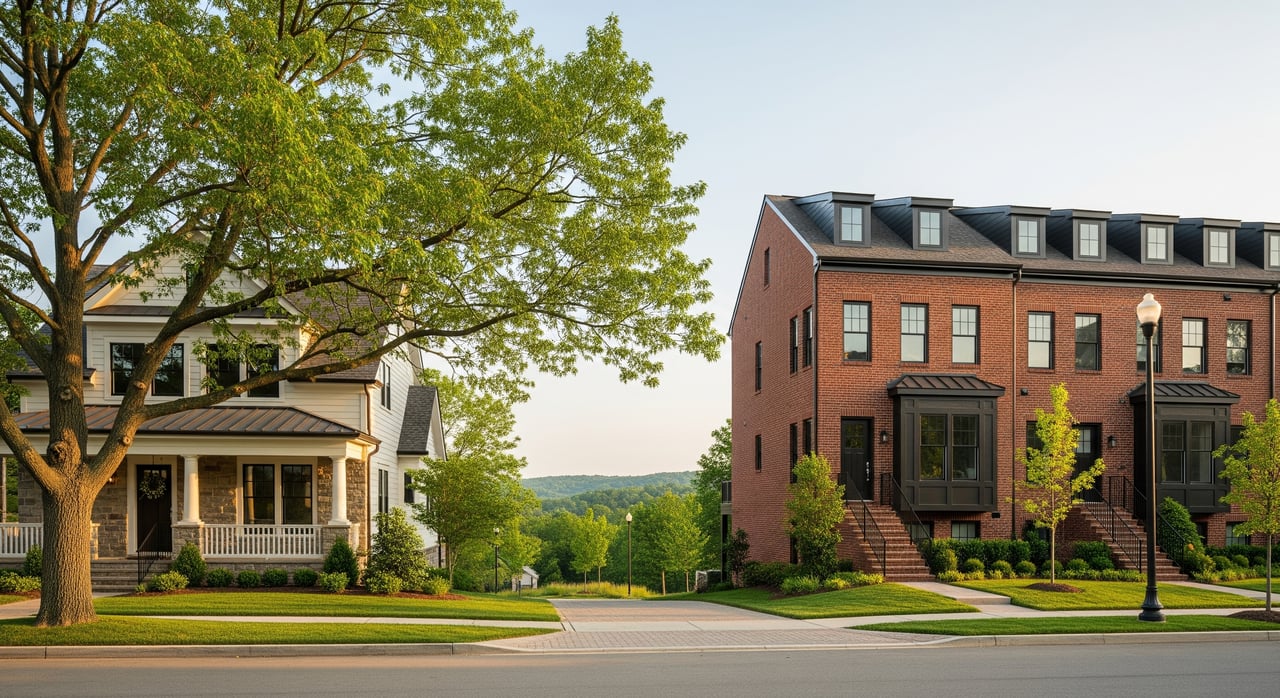
Trying to decide between a Brambleton townhome or a single-family home? In 20148, both options are in demand, but they behave differently as the market shifts. You want clarity on price, speed, maintenance, and long-term value so you can move with confidence. This guide breaks down how townhomes and single-family homes compare in Brambleton today and what that means for your next step. Let’s dive in.
Brambleton at a glance
Brambleton is a master-planned community in western Loudoun County with a mix of townhomes, single-family homes, and condos. You get a blend of modern construction, community amenities, and an active HOA structure that shapes lifestyle and costs.
Commuting is a key driver. You have access to the Dulles Greenway, Loudoun County Parkway, and Route 7, plus the Silver Line extension into Loudoun County that opened in 2022. Proximity to the Dulles corridor and regional employers supports steady demand for both townhomes and single-family homes.
Amenities, parks, and a town center help townhomes compete on lifestyle, while detached homes attract buyers who want more space and a private yard. Your best fit depends on how you balance space, monthly costs, and maintenance.
Price and affordability
In Brambleton and across Loudoun County, townhomes usually offer a lower entry price than single-family homes in the same area. That gap is often why first-time buyers and relocating professionals start with townhomes. Single-family homes typically require a larger budget, which can mean higher down payments and monthly payments.
When you compare affordability, look beyond the list price. Focus on your all-in monthly:
- Mortgage and property taxes
- HOA or condo association dues
- Insurance, utilities, and typical maintenance
- Potential private mortgage insurance if your down payment is below lender thresholds
Townhome dues often include exterior or common-area upkeep that you would pay for separately in a detached home. In a single-family neighborhood with an HOA, dues may be lower but responsibilities can be higher. The right choice is the one that matches your monthly comfort level and maintenance preference.
Inventory and new construction
Brambleton’s master-planned nature means builder activity can influence supply. Townhome inventory often gets replenished by new phases or nearby communities, which can create more choice at certain times of year. Single-family supply is more dependent on owner turnover and the pace of new lot releases.
What that means for you:
- Buyers can see more townhome options during active builder release periods, sometimes with incentives that affect resale pricing nearby.
- Single-family sellers may benefit from tighter supply, but pricing still needs to reflect size, condition, and location within the community.
- Both segments can feel competition shift quickly based on interest rates and seasonal trends.
Days on market and speed
Days on market tends to mirror demand, rates, and seasonality. Spring often brings more activity and faster contracts. In higher-rate periods, entry-level segments can slow first, which can affect townhome velocity. Well-priced homes in either category still move quickly, especially if they present cleanly and show well.
To position yourself:
- As a buyer, be pre-approved, understand your must-haves, and watch new listings closely.
- As a seller, price to the market, prepare the home, and align your launch with peak showing windows.
Appreciation and risk
Single-family homes start from higher price points, so their absolute appreciation can look larger in dollar terms. Townhomes can post strong percentage gains in fast markets, but they may be more sensitive to shifts in mortgage rates because many buyers use financing with smaller down payments.
For a longer view, track 3 to 5-year trends rather than focusing only on quarter-to-quarter swings. In Brambleton, ongoing amenities, the Silver Line connection, and access to regional job centers support the case for steady demand through cycles. The biggest wildcards are interest rates, new construction competition at specific price bands, and policy changes that affect supply or desirability.
HOA and maintenance differences
HOA structures vary by subcommunity, but some differences are common:
- Townhomes: Dues often cover exterior or common-area maintenance, trash, landscaping of shared spaces, and community amenities. Some enclaves include limited yard care.
- Single-family: Dues may be lower but typically cover shared amenities and common areas. You are usually responsible for your lot’s landscaping and exterior maintenance.
This affects your monthly budget and your inspection checklist. In a townhome, clarify who handles roof, siding, and lawn services. In a detached home, budget for full exterior upkeep, seasonal landscaping, and potential long-term items like roof replacement.
Rental demand and investors
Townhomes often attract renters looking for a lower-maintenance option with community amenities, while single-family rentals appeal to households that value a yard and more privacy. Investor interest can tighten competition in certain price ranges, especially if cash buyers target low-vacancy segments.
If you plan to rent your property at any point, confirm current rules. County regulations and HOA documents can set standards for lease terms and may address short-term rental activity. The right strategy depends on your time horizon and the HOA’s policies in your specific section of Brambleton.
Financing and eligibility
Financing mix tends to differ by property type and price band:
- Townhomes frequently see conventional loans and government-backed options like FHA or VA, which allow for lower down payments, subject to property and project eligibility.
- Higher-priced single-family homes can require larger down payments or jumbo financing. That can narrow the buyer pool when rates rise but can also support stronger appraisal performance when comps are robust.
Your lender can help you estimate monthly payments and clarify HOA or project eligibility requirements that may apply to townhomes or condos.
Who each option fits best
There is no one-size-fits-all answer, but these patterns can help you focus your search:
- You want a lower entry price and simplified upkeep: Consider a townhome, especially if you value amenities and a shorter to-do list.
- You want more space, a yard, or future expansion potential: Consider a single-family home with a lot that fits your plans.
- You are relocating on a tight timeline: Townhomes can offer more inventory and a faster search path. If you need space, a targeted single-family search with quick readiness can still work.
- You plan to hold long term: Both can make sense. Choose based on maintenance comfort, HOA structure, and how you expect to use the space over time.
Buyer tips for Brambleton
- Get fully underwritten pre-approval. You will be more competitive and clearer on budget.
- Compare all-in monthly costs. Weigh HOA coverage against private maintenance.
- Track builder releases. New phases can affect your leverage on resales and may offer incentives.
- Be inspection-ready. For townhomes, clarify shared elements and HOA responsibilities. For single-family, budget for systems and exterior items.
- Plan your timing. Spring often brings speed, but good opportunities appear year-round.
Seller tips for Brambleton
- Align pricing to today’s gap. Townhomes and single-family homes attract different buyer pools; price to your competitive set.
- Maximize presentation. Clean, staged, and well-photographed listings attract faster and higher-quality offers.
- Time your launch. Target peak showing windows and consider pre-list preparations to hit the market at full strength.
- Prepare for concessions strategy. Rate-sensitive segments sometimes respond to closing-cost or rate-buydown options more than list-price drops.
- Monitor nearby builder activity. New releases can influence traffic and buyer expectations.
What to watch next
- Mortgage rates. Rate moves can quickly change demand at different price tiers.
- New construction and permits. Builder activity affects supply, pricing power, and incentives.
- School boundary updates. Attendance zones can shift; verify the most current assignments for any property you consider.
- Transportation projects. Improvements that enhance access to regional job centers support long-term demand.
- HOA and local policy changes. Rules for rentals, exterior standards, or amenities can affect costs and future plans.
Choosing between a townhome and a single-family home in Brambleton starts with your monthly budget, space needs, and maintenance comfort. From there, current inventory, builder activity, and rate trends shape your timing and negotiation approach. If you want a clear, data-backed path tailored to your goals, the Bill Davis Team can help you compare options, time the market, and position your move for success.
FAQs
How much cheaper is a Brambleton townhome vs a single-family home?
- Townhomes typically have lower entry prices, but the exact gap varies by size, finish level, and location within 20148; compare current comps and all-in monthly costs.
What do Brambleton HOA fees usually cover for each home type?
- Townhome dues often include common-area upkeep, amenities, and some exterior items; single-family dues usually focus on shared amenities while owners handle lot maintenance.
Do townhomes or single-family homes sell faster in 20148?
- Speed changes with season and rates; spring often moves quicker, and well-priced, well-presented homes in either category can secure fast offers.
Are there rental restrictions I should know about in Brambleton?
- Rental policies can vary by subcommunity and county rules; review HOA documents and confirm lease length, registration, and any short-term limitations before you buy.
How does the Silver Line impact Brambleton housing demand?
- Added access to regional job centers supports demand across home types, especially for buyers prioritizing commute options and proximity to employment hubs.
